- -5%


The PrimePlant paper mulch film ensures excellent weed protection for 5–7 months depending on humidity and rainfall levels.
The film provides nutrients to the soil and the plant, and at the end of the crop cycle fully biodegrades without leaving residues and without the need for removal.
↓ Select the size of your roll ↓
 100% biodegradable
Entirely biodegradable, it leaves no residue in the soil.
 Permeable and breathable
Water penetrates and the ground breathes.
 Soil nutrient
It helps to make the soil fertile and structurally strong.
100% biodegradable
Fully biodegradable, leaves no residues in the soil
Permeable and breathable
Water penetrates and the soil can breathe
Soil nourishing
Helps make the soil fertile and structurally strong

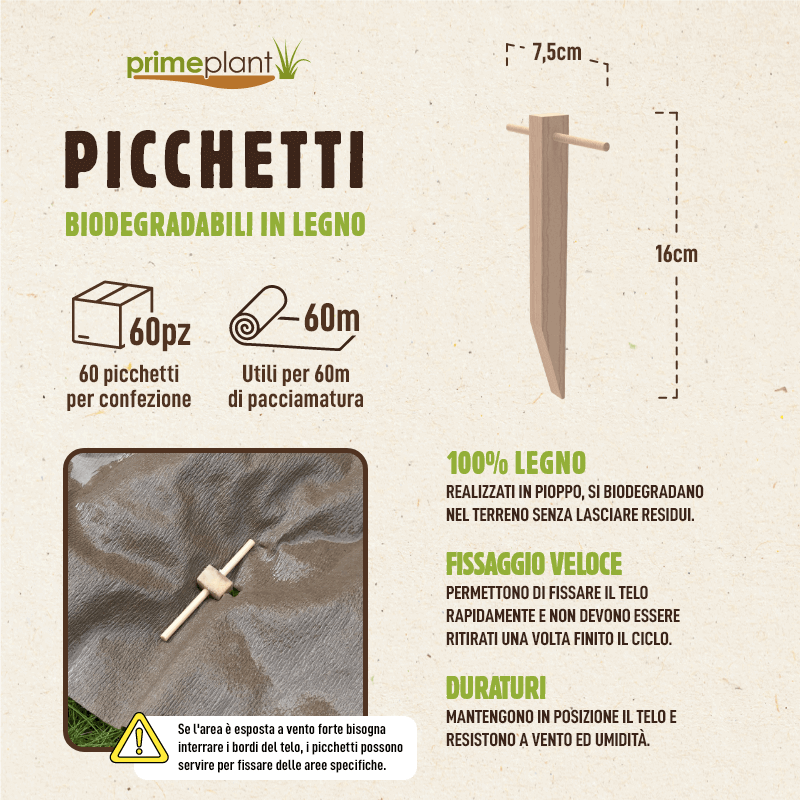
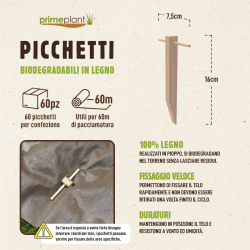
These biodegradable pegs are the ideal solution for fixing mulch fabric without polluting the soil or releasing harmful metal elements for machinery.
Note: If the area where the mulch fabric is laid is exposed to strong winds, the edges must be buried; these pegs can be used to reinforce specific sections. |
60 Biodegradable Poplar Wood Pegs – Natural fixing for mulch fabric (for approx. 60m) |
|

|
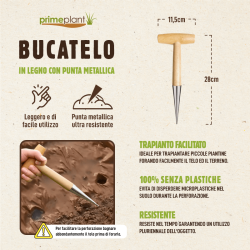
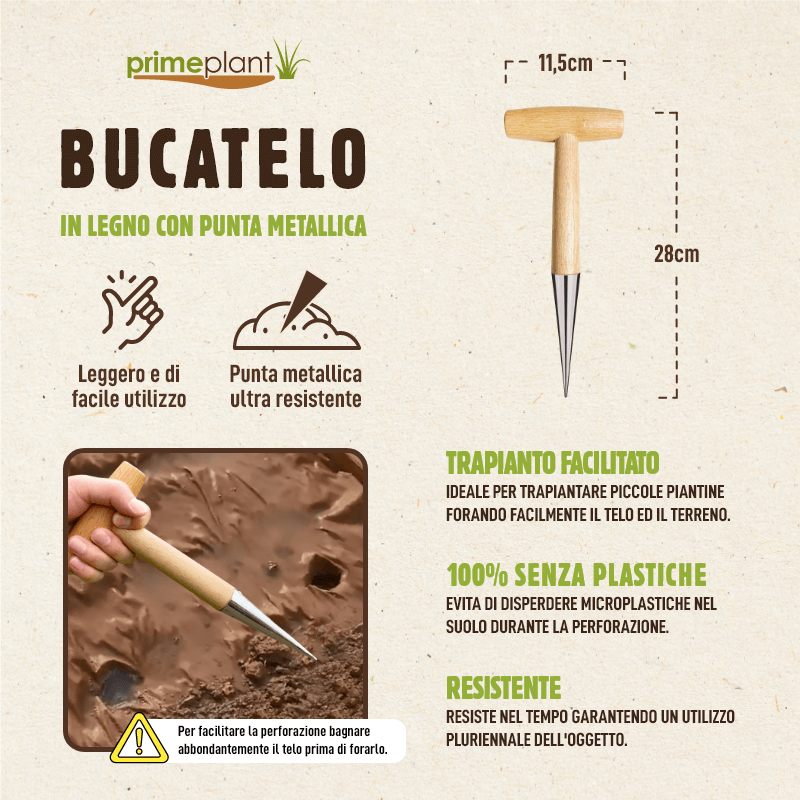
Wooden dibber with metal tip for easier transplants – durable and plastic-free |
| 0.6m | 0.9m | 1.2m | 1.4m | 1.6m | |
| 20m | ❌ | ✓ | ❌ | ❌ | ❌ |
| 100m | ✓ | ✓ | ✓ | ✓ | ❌ |
| 300m | ✓ | ✓ | ✓ | ✓ | ✓ |
Data sheet
Specific References
 play_circle_filled
The mulch sheet lasts between 5 and 7 months, depending on weather conditions and soil moisture.
Yes, the sheet is completely natural and neutral. It nourishes the soil and provides organic matter beneficial to microorganisms and plants.
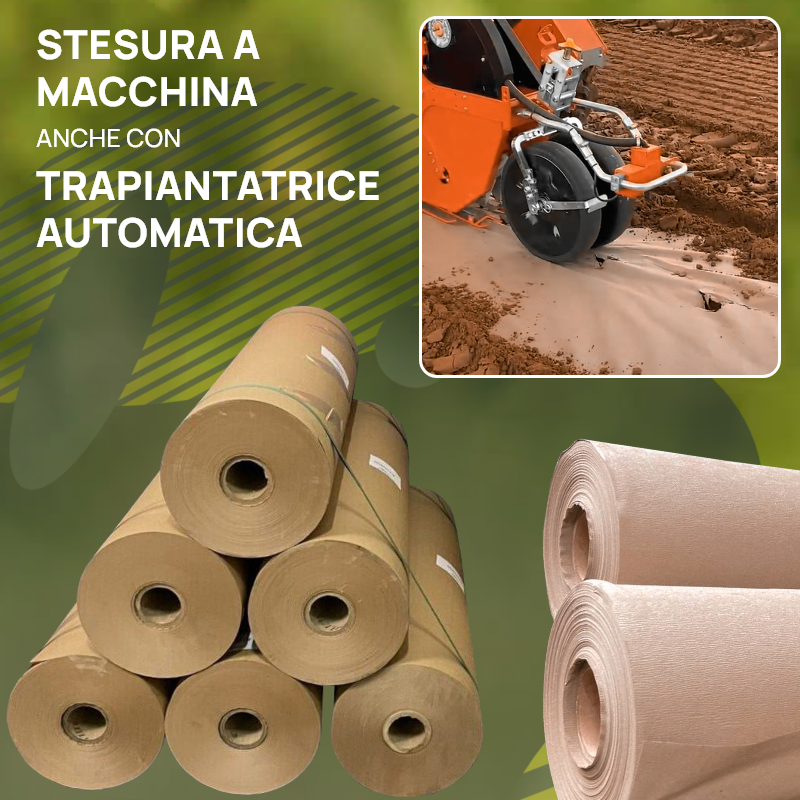
Prime Plant is specifically designed to be laid with an automatic mulching machine, as well as with transplanters or seeders. The sheet is elastic and resistant to mechanical stress during installation.
For large orders, please send a request to shop@prime-plant.com specifying roll size, quantity, delivery address and company details.
This product can be irrigated with jet irrigation, rain or sprinklers. You can also place the dripline on top of the sheet.
The drip lines can be placed either above or below the sheet.
– If placed above, the water is absorbed and then released into the soil. Durability is not reduced and the sheet stays well anchored even in strong winds.
– If placed underneath, the lines are protected from the sun.
Inside the sheet there are two types of elements that act as natural fertilizers for the soil and plants, namely:
- the plant fiber that makes up the product
- two types of brown algae (Ascophyllum Nodosum and Laminaria Digitata), first dissolved in water and then added to the mixture at a rate of 0.75 ml per square meter (organic carbon 6%, mannitol 9 g/L)
The table shows the residual analysis of the sheet. The fertilizing action comes from cellulose and Ascophyllum Nodosum and Laminaria Digitata algae, first dissolved in water and then added to the mixture at a rate of 0.75 ml per square meter (organic carbon 6%, mannitol 9 g/L).
The fertilizer added to the sheet is a solution of brown seaweed cream (Ascophyllum Nodosum and Laminaria Digitata). It is a completely natural product with specific biostimulant properties that is permitted in organic farming.
Ridging is not needed with this sheet.
Delivery time is 5–7 working days.
The sheet complies with EU standards for organic farming. It is made from pre-consumer recycled FSC paper, leaves no residues, and has a neutral pH. Registration with the Italian Ministry (Mipaaf) is in progress, but this does not prevent its use.
Ideally, 10–15 cm should be buried.
The roll weighs 13 kg.
You can overlap the sheets. Keep in mind the entire seam must be fixed with soil or weights. Using the 1.20 m sheet offers greater strength in the central part.
Buongiorno, abbiamo dei rivenditori in Italia, ma per ora non nella zona di Firenze
Buongiorno, si può stendere a mano, l'impianto a goccia può essere posizionato sia sopra che sotto al telo; se posizionato sopra aiuta a mantenere il telo in posizione, se posizionato sotto il telo protegge la manichetta dal sole.
Buongiorno, si, può essere usato anche per le patate
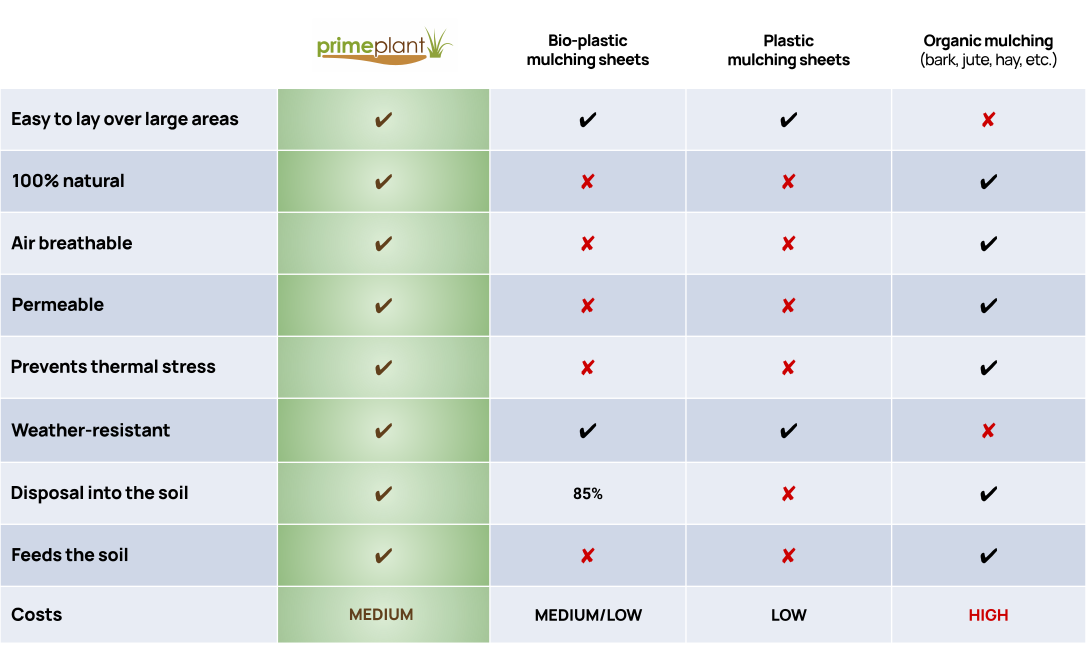
In the same greenhouse we tested two different types of mulching: plastic and paper.
The plant on the left, grown on plastic mulch, is weakened and behind in growth compared to the plant on the right, grown on Prime Plant paper mulch.
Plastic and bioplastic mulches do not allow the soil to breathe, suffocating the plant’s root system.
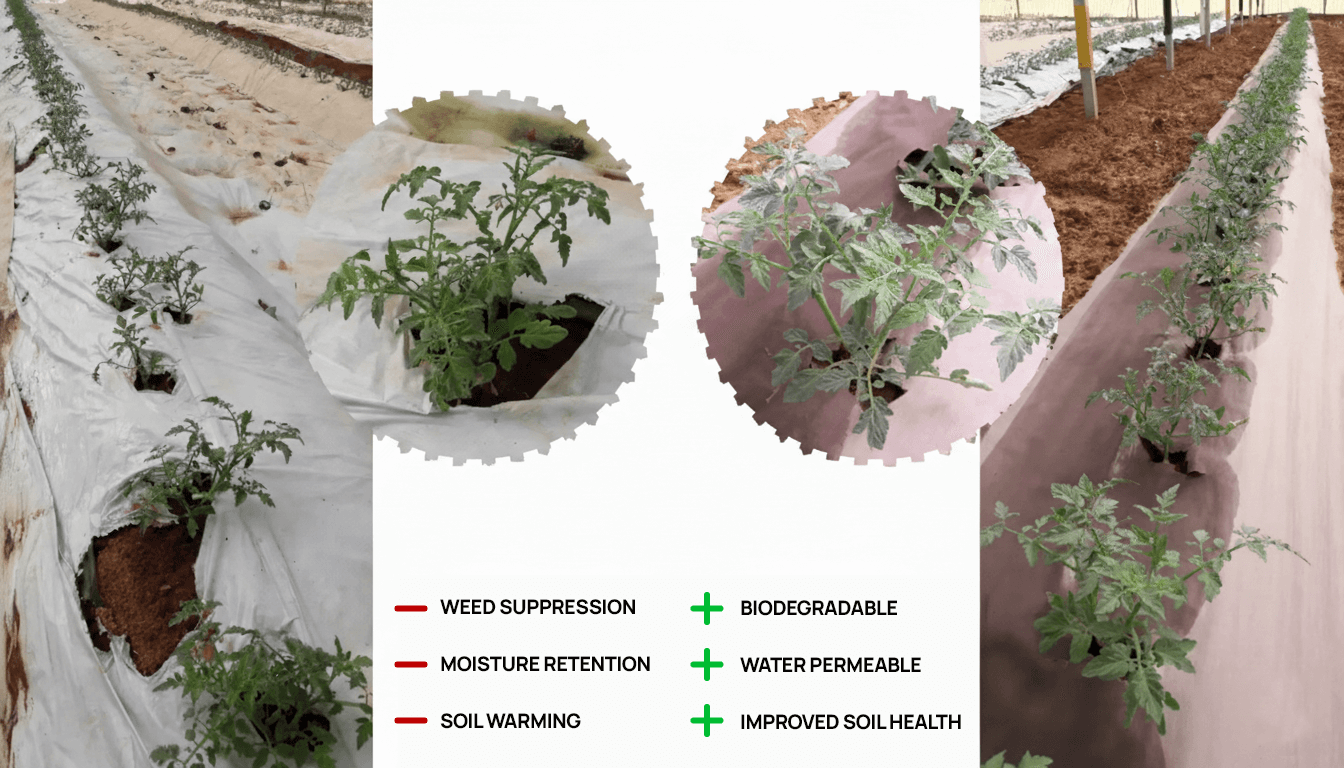

Plastic and bioplastic films cause overheating problems in the soil and in the root system.
When the film overheats, it also causes burns to plants and fruits, resulting in lower production in both quantity and quality.
All bioplastic films contain between 10% and 20% plastic.
All plastics released by these films are then dispersed into the soil and absorbed by the plant, which transfers them to the fruits.
The PrimePlant paper mulch film ensures excellent weed protection for 5–7 months depending on humidity and rainfall levels.
The film provides nutrients to the soil and the plant, and at the end of the crop cycle fully biodegrades without leaving residues and without the need for removal.
↓ Select the size of your roll ↓